
Guides·4 Nov 2026 · 4 min read
Buying a South Delhi home this Dhanteras: a 2026 checklist
The Rent A Roof desk
Defence Colony, South Delhi
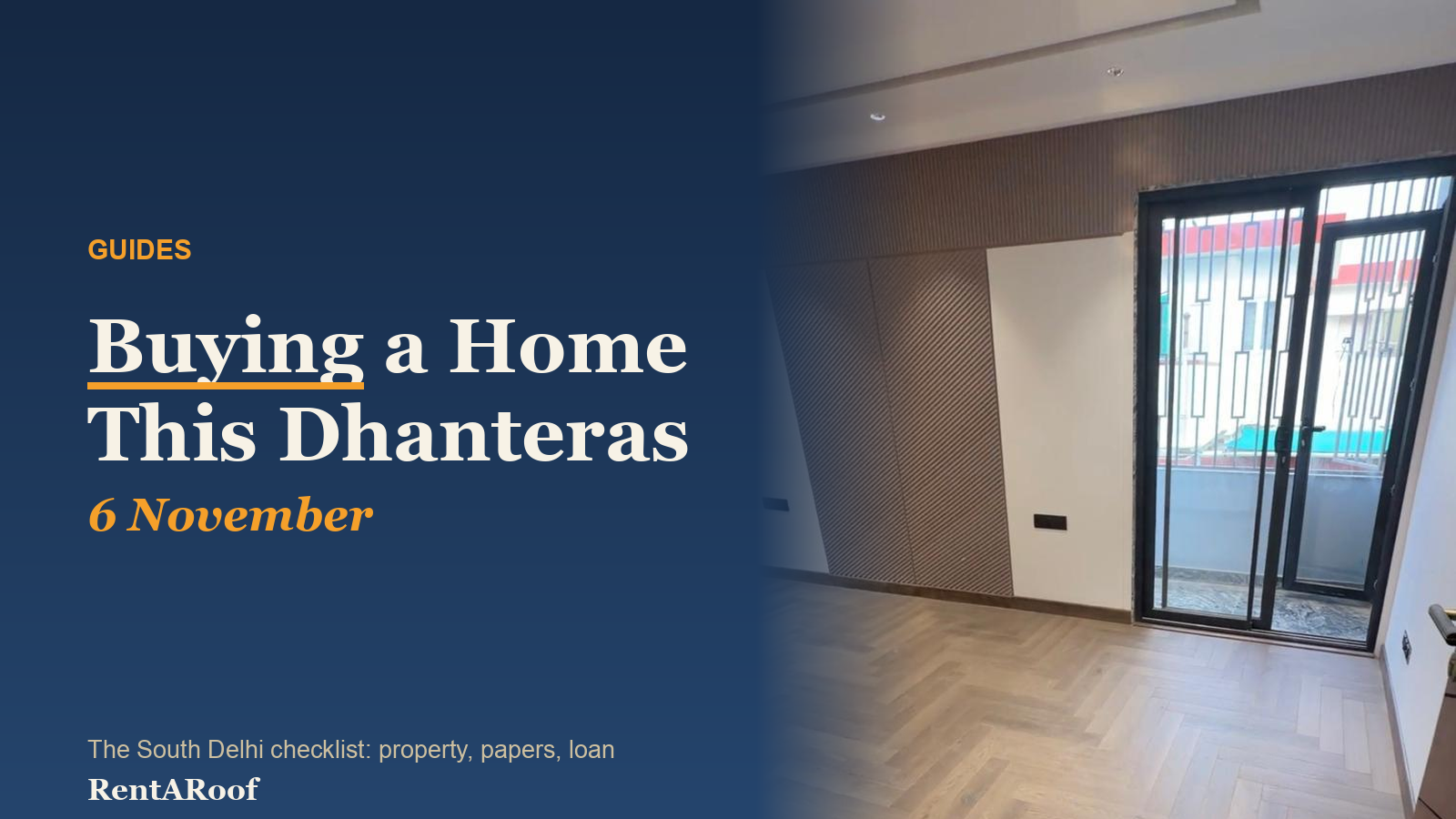
Dhanteras falls on Friday, 6 November 2026, and every year it brings a rush of buyers who want to book or register a home on an auspicious day. A festive deadline is a fine reason to buy, but not a reason to skip checks. Here is the list we take South Delhi buyers through.
1. The property
- Plot, floor and roof rights. In a builder floor you buy one floor of a building, so get it in writing what comes with it: a share of the land, the terrace or roof rights if any, the basement, and your stilt parking slot.
- Sanctioned plan and completion. Ask for the building plan sanctioned by the municipal corporation and, for a finished building, the completion-cum-occupancy certificate. Many older floors don't have one. Compare the plan with what has actually been built.
- New build or older. A new floor usually comes with a lift and stilt parking. Ask for a written defects-liability period: many small builder-floor projects aren't registered under RERA, so the Act's five-year cover for structural defects may not apply. An older floor is often cheaper per square foot but may need work.
2. The title and the paperwork
- Chain of title. Ask for the chain of sale deeds back to the original allotment, so you can see how the property reached the seller.
- Freehold or leasehold. Check whether the property is freehold, or whether a conversion is pending.
- Mutation and dues. Confirm the seller's name is on the municipal records and that property tax and utility bills are paid up.
- Encumbrances. Make sure there's no outstanding loan or dispute on the property. A lawyer's search report is worth the fee.
3. The costs on top of the price
- Stamp duty in Delhi is 6% when a man buys and 4% when a woman buys, charged on the agreed price or the government's circle-rate value, whichever is higher. For a man and a woman buying jointly, 5% is commonly charged; confirm it with your lawyer or the sub-registrar. A registration fee of 1% on the same value, plus a ₹100 pasting fee, is added on top.
- Delhi's circle rates, unchanged since 2014, have been under review by a government panel since June 2025. Check the rate in force on the day you register.
- Budget for the lawyer, the brokerage and any society or transfer charges as well.
4. The loan
The RBI raised its repo rate to 5.50% on 7 October and said rate cuts are off the table in the near term. If you're borrowing on a floating rate, assume your EMI, or your loan tenure, will rise at the next reset. If your lender passes on the full 0.25 percentage point, a ₹1 crore, 20-year loan at 8.50% costs about ₹1,590 a month more. Get your sanction letter before you pay a token amount, not after.
5. The timing
- Registration on auspicious days is busy. Book your sub-registrar appointment early, and have every document ready a few days before.
- Under construction? Delhi's winter construction curbs began on 1 November: no dust-generating demolition or outdoor civil construction until 31 January, and almost no construction at all from 10 December to 20 January. If the floor isn't finished, agree a realistic possession date. Our guide to the winter ban explains what it covers.
6. The price
Know the going rate in the colony before you negotiate. Our 3 BHK price guide by colony has live asking-price ranges, and each colony page lists every floor for sale today.
Buying this festive season? We'll check the paperwork with you, line up floors in your budget, and help you plan the paperwork around the date that matters to you.
Sources: Delhi Revenue Department (stamp duty and registration fees); Reserve Bank of India, MPC resolution of 7 October 2026. EMI figures are our own calculation.